
Gwinnett County Criminal Court Records
A Gwinnett County criminal court record is the case-level file kept by the court after charges are filed. It may begin with an accusation, indictment, warrant-linked filing, citation-linked filing, or other charging record. From there, the court file tracks arraignment, pleas, motions, hearings, orders, verdicts, dispositions, sentences, probation terms, fines, fees, and appeals.
Superior Court is the main court for felony criminal cases in Gwinnett County. State Court handles misdemeanor matters. Magistrate Court can handle warrant applications, search warrants, first appearances, preliminary hearings, and other early criminal events. Recorder's Court handles traffic and ordinance citations that can create court records but are not the same as Superior or State criminal case files. The charge-focused path is covered separately in Gwinnett County arrest records and court charges.
For prosecutor-related criminal matters, the Gwinnett County District Attorney's Office is led by Patsy Austin-Gatson and is located at 75 Langley Drive, Lawrenceville, GA 30046. The DA phone listed in the research file is 770-822-8400.
Search Gwinnett Criminal Court Records
The main court search path is the Gwinnett Courts case-search page. Criminal cases in Superior, State, and Magistrate court records use the Tyler Odyssey Portal. Some statewide access is also available through re:SearchGA. Traffic or ordinance cases handled by Recorder's Court use the separate Recorder's Court eCourt portal.
- Identify the court first: Superior for felonies, State for misdemeanors, Magistrate for early warrant and preliminary-hearing activity.
- Open the Gwinnett Courts case-search page and choose Odyssey for Superior, State, or Magistrate criminal records.
- Search by case number when known, or by defendant name if the case number is not available.
- Read the docket entries for charges, pleas, hearing events, motions, disposition, and sentence.
- Call the Clerk of Court at 770-822-8100 for certified copies or when the online record is incomplete.
Gwinnett County GovQA is not the right route for Superior, State, or Magistrate Clerk court records. The county open-records page says those court records are excluded from the county online request portal and should be obtained through Gwinnett Courts or by phone.
Gwinnett County Criminal Case Stages
A criminal case file changes as the case moves. A charge may be filed, amended, reduced, dismissed, or resolved by plea or trial. The docket should be read in sequence because an early charge entry does not prove the final outcome. Later entries can change the meaning of the case.
Case flow: Charges Filed › Arraignment › Pretrial and Motions › Plea or Trial › Disposition › Sentencing
| Stage | What Happens |
|---|---|
| Charges Filed | The prosecutor or grand jury files the accusation, indictment, or other charge document. |
| Arraignment | The defendant is formally advised of the charge and a plea may be entered. |
| Pretrial / Motions | Parties file motions, request hearings, address evidence, or discuss resolution. |
| Plea or Trial | The case resolves by plea, verdict, dismissal, or another disposition. |
| Sentencing | The court enters punishment, probation, fines, restitution, jail, prison, or other conditions when required. |
The GBI criminal-history restriction page is relevant after some criminal cases end. The GBI record restriction page is shown below.
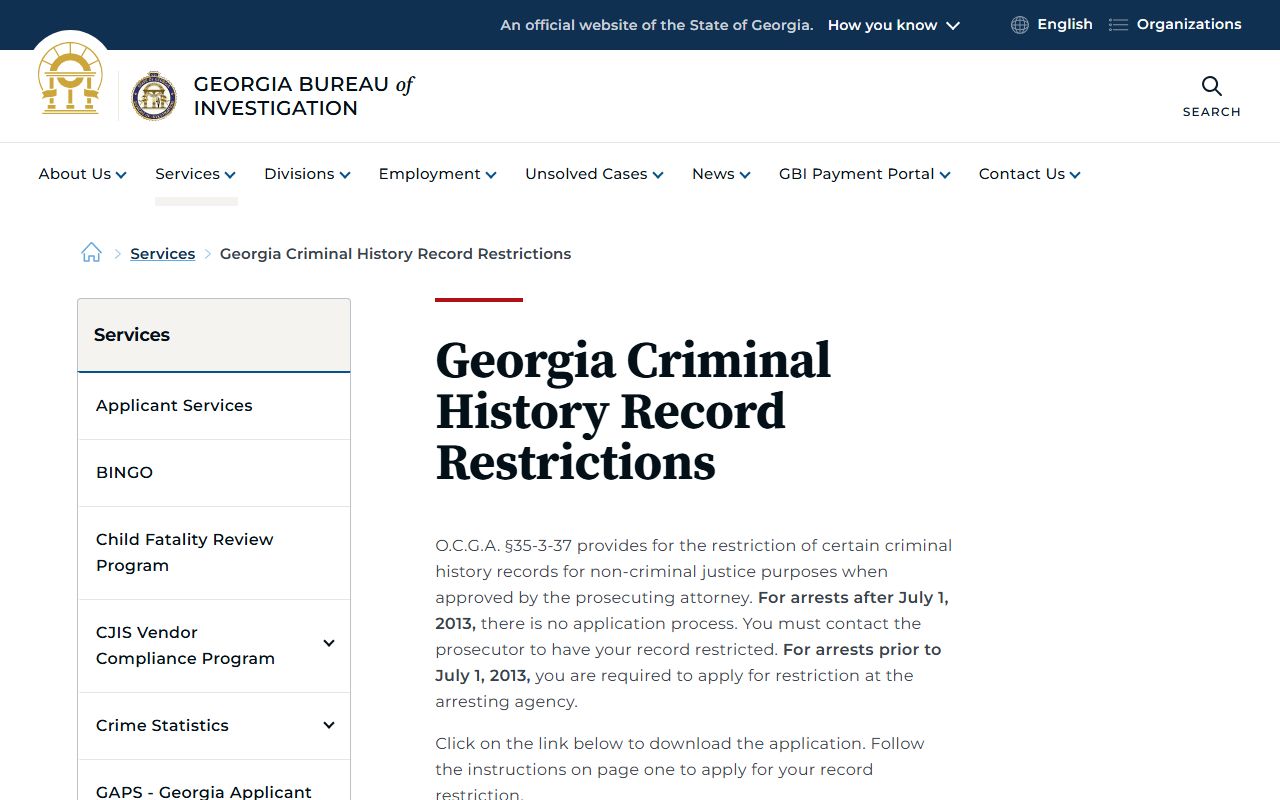
That source is most useful for restriction rules, not for searching the local court file itself.
What Gwinnett County Criminal Records Show
Criminal court records can include both legal events and practical identifiers. A file may show the defendant, court, case number, charges, statutes, warrant or citation values, bond, plea, motion history, hearing settings, trial entries, disposition, sentence, probation, restitution, fines, and costs. Some information comes from docket entries. Some comes from attached documents, which may not be visible online.
| Field | What It Shows |
|---|---|
| Case Number | The court tracking number assigned by Superior, State, Magistrate, Recorder's, or another court. |
| Defendant | The person accused in the case, sometimes with additional identifiers redacted from public view. |
| Charges | The offense text, statute, severity, and count-level detail when shown. |
| Bond | Bond amount, bond type, cash-only status, or conditions when entered in the case or booking record. |
| Plea | Guilty, not guilty, nolo contendere, or another plea entry when accepted by the court. |
| Disposition | Dismissed, nolle prosequi, guilty, not guilty, transferred, reduced, or otherwise resolved. |
| Sentence | Jail, prison, probation, fines, fees, restitution, program conditions, or other court-ordered terms. |
Gwinnett County Criminal Charges vs Convictions
Being charged is not the same as being convicted. A Gwinnett County criminal court record can show charges that were amended, reduced, dismissed, or ended in acquittal. A conviction requires a guilty plea, no-contest plea treated as a conviction for court purposes, or a guilty verdict. Always read the disposition and sentence entries before describing the result.
| Charge | Conviction | |
|---|---|---|
| Stage | An accusation, indictment, citation, or complaint alleges an offense. | The court accepts a plea or verdict that establishes guilt. |
| Record Meaning | Shows what was filed or alleged. | Shows the final or count-level finding. |
| Can Change | May be amended, reduced, dropped, or dismissed. | May be followed by sentence, probation, appeal, or restriction request. |
Gwinnett County Criminal Record Sources
Statewide systems answer different questions from the Gwinnett criminal court file. The Georgia Sex Offender Registry is managed by GBI under O.C.G.A. 42-1-12. The Georgia Department of Corrections offender search is for state-prison offenders. Georgia VINE provides custody-status and criminal-case notification, with a phone number listed in the research file as 1-833-216-6670.
The GBI registry is a separate statewide source. The Georgia Sex Offender Registry public site is shown below.
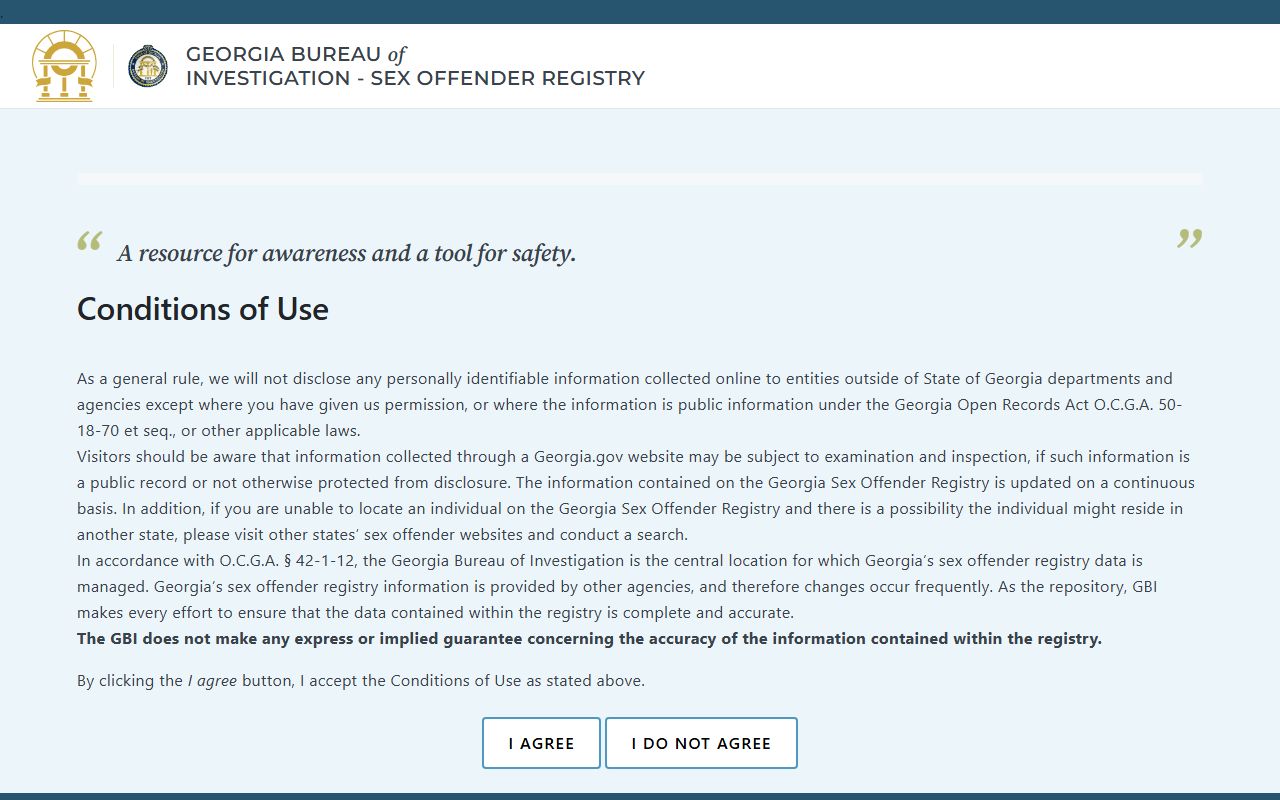
Registry status does not replace the local court docket, which holds the case events and court disposition.
For sentenced state custody, the Georgia Department of Corrections offender search page is shown below.
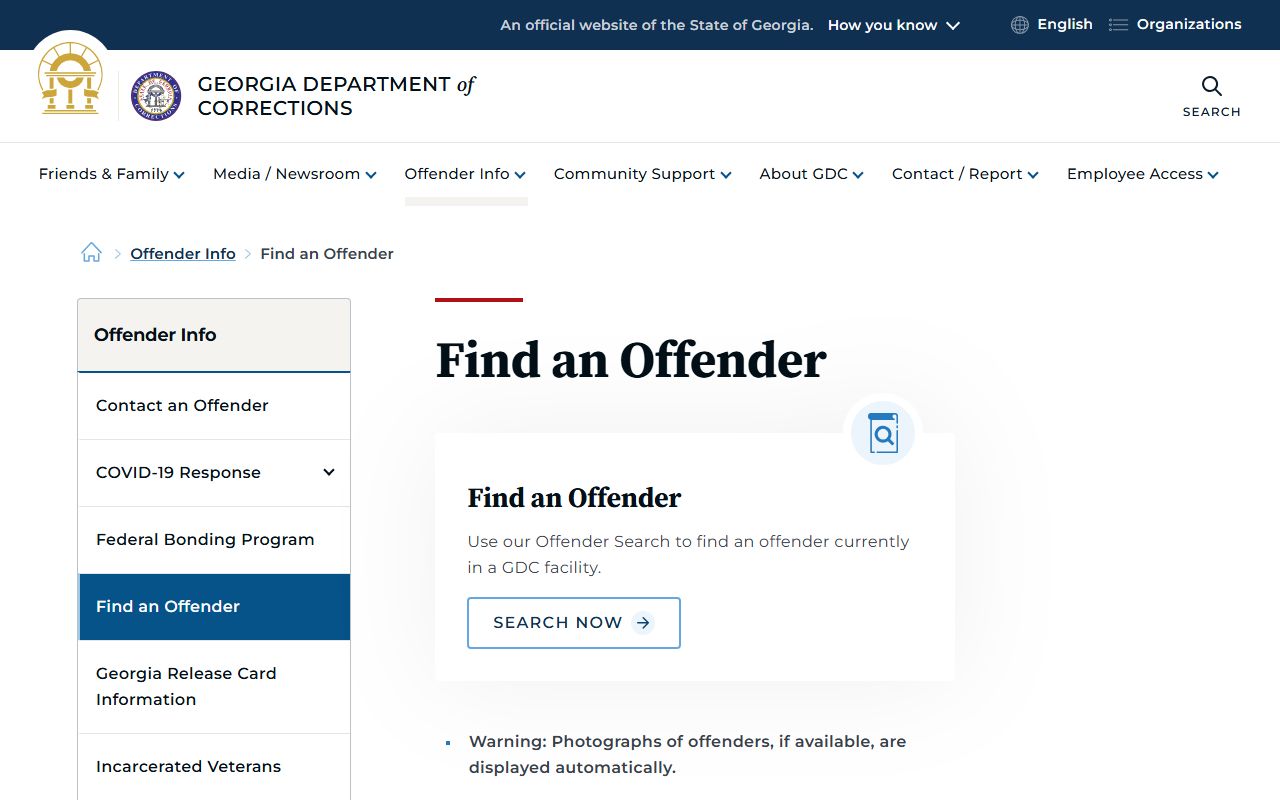
GDC records are post-sentence custody records, so they should not be treated as the complete Gwinnett County criminal case file.
Sealed Gwinnett County Criminal Records
Georgia often uses the term record restriction rather than expungement. Restricted access can limit public or non-criminal-justice access, but it does not always mean a record was physically destroyed. Juvenile cases, sealed cases, adoption-related matters, protected identifiers, and some active investigative material can also be withheld from public search tools.
| Sealed | Record Restricted | |
|---|---|---|
| Public View | Hidden from ordinary inspection by law or court order. | Limited from non-criminal-justice access when approved under Georgia law. |
| Legal Source | Court rule, statute, or sealing order. | O.C.G.A. 35-3-37 and prosecutor or agency process. |
| Gwinnett Route | Ask the court that sealed or controls the file. | Post-July 1, 2013 arrests route through the prosecutor, including the Gwinnett DA when applicable. |
The Georgia VINE notification portal is shown below.

VINE can help with custody and case notifications, but it is not the official court docket or criminal case file.
Public Access to Gwinnett County Criminal Records
Georgia's public-record framework includes the Open Records Act at O.C.G.A. 50-18-70 through 50-18-74 and court access rules such as Uniform Superior Court Rule 21. Those sources support public access unless a law, rule, exemption, or court order limits it. Gwinnett's practical rule is more specific: Clerk court records for Superior, State, and Magistrate courts are not routed through county GovQA.
Key Statutes:
O.C.G.A. 50-18-71 addresses inspection and copying of public records subject to exemptions, timing, and fees.
O.C.G.A. 35-3-37 governs qualifying Georgia criminal history record restriction.
Restricted Gwinnett Criminal Court Records
For arrests after July 1, 2013, GBI says there is no application process through GBI first. The person must contact the prosecutor to have the record restricted. In Gwinnett County, the District Attorney's Office has a record restriction link and form resources. For arrests before July 1, 2013, GBI states the applicant is required to apply at the arresting agency.
Eligibility depends on the charge, date, disposition, prior history, and statutory limits. A dismissed charge, a nolle prosequi entry, or an acquittal may still require a formal process before public access changes. If the record is juvenile, sealed, or tied to a protected proceeding, public staff may not be able to confirm details in the same way as an adult open case.